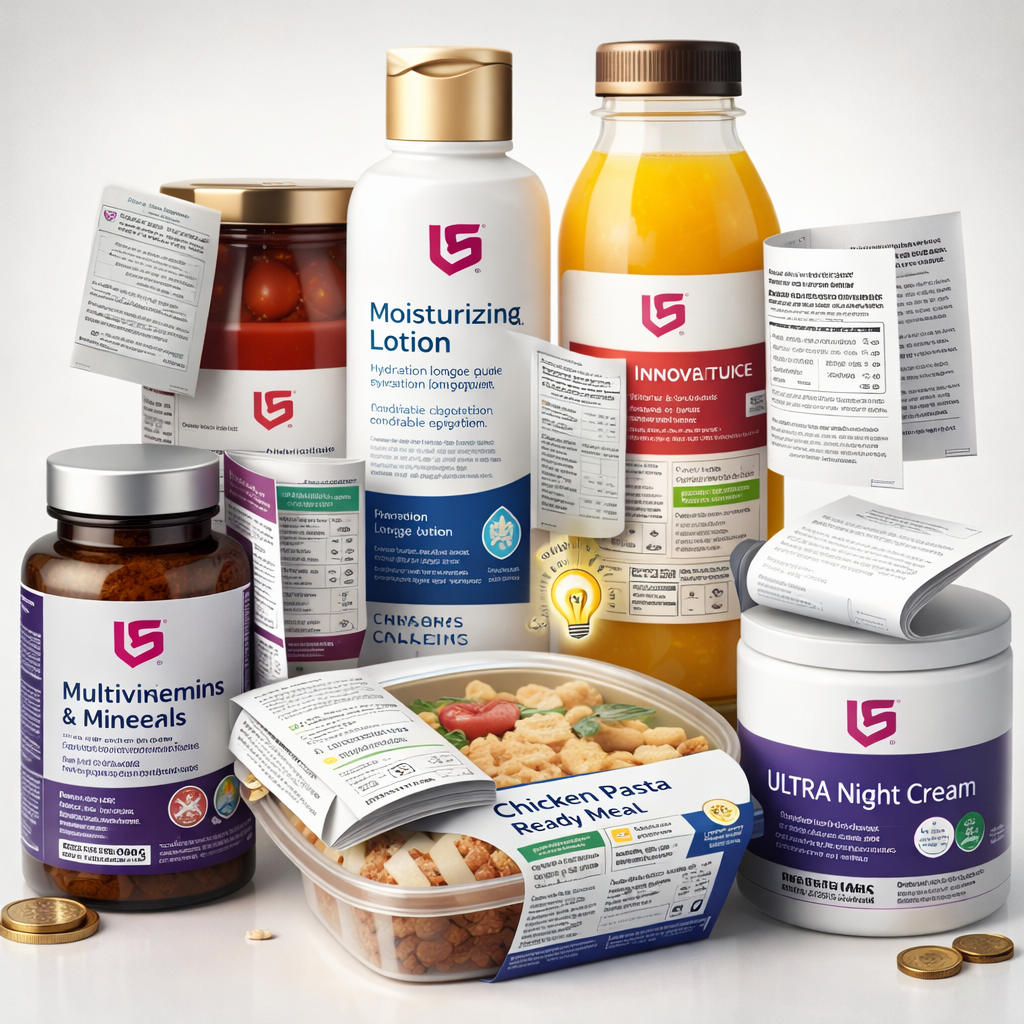
With rising material prices and stricter labelling regulations in 2026, many manufacturers are looking for smarter ways to include all the required information without increasing packaging costs. Booklet labels offer a practical and cost-effective solution for products that need more space than a standard single-layer label can provide.
What Are Booklet Labels?
Booklet labels consist of a permanent base layer that sticks to the container and several folded or bound pages on top that open like a small booklet. This construction allows you to present extensive information — such as full ingredient lists, cooking instructions, safety warnings, dosage details, storage guidance, or multiple language translations — within the same compact footprint as a normal label.
Unlike separate leaflets or larger outer cartons, the booklet is integrated directly onto the product, reducing the total number of packaging components.
How Booklet Labels Help Control Costs in 2026
The biggest cost advantage comes from information density. Instead of using bulky multi-page inserts or increasing the size of the primary label, you can fit significantly more content in a single label. This often eliminates the need for additional leaflets, cartons, or extra printing runs, delivering direct material and assembly savings.
In the current environment of elevated resin and paper prices, booklet labels can actually help reduce overall material usage. Because the extra pages are folded within the base label area, you avoid the waste and cost associated with larger single-layer designs or separate components.
Practical Benefits for Production and Durability
Modern booklet labels are designed to run efficiently on standard labelling equipment, so they do not slow down high-speed production lines as much as traditional multi-page solutions. When produced with strong hinge constructions, quality adhesives, and protective varnishes, they remain durable even after repeated opening and closing.
For food, drink, cosmetics, chemical, and pharmaceutical products, booklet labels provide a professional finish while meeting strict regulatory requirements for legibility and permanence of critical information.
When Booklet Labels Deliver the Best Value
Booklet labels are particularly effective for products that require detailed information but have limited space on the container. They work well for sauces, ready meals, premium beverages, skincare products, cleaning chemicals, and over-the-counter medicines. In categories affected by resin price volatility, switching to booklet labels can help offset cost increases by simplifying the overall pack format and reducing the need for supplementary packaging.
They are also useful when you need to include multiple languages or when regulations frequently change, as updates can often be handled with minimal redesign.
Smart Ways to Maximise Savings
To get the most value from booklet labels:
- Combine them with QR codes for additional digital content (recipes, videos, or detailed technical data).
- Choose lightweight materials where possible to further reduce resin or paper usage.
- Standardise booklet sizes across product ranges to lower setup and printing costs.
- Work with an experienced converter to select the right adhesives and varnishes for your specific product and storage conditions.
Booklet labels offer a smart, cost-effective way to handle extra information in 2026 without significantly increasing your packaging budget. They deliver high information capacity in a compact, production-friendly format that reduces the need for separate components and helps manage rising material costs.